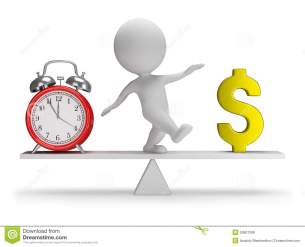
The discussion has been about money, does it have you or do you have it? Money is taboo, but it’s a vital taboo topic! Money has the ability to change one’s life in both good ways and/or bad ways. Because it is an inanimate object that has value, that value can be misplaced depending on the holder of it. The ability to manage money is a learned behavior. It is taught and unfortunately, usually taught by observation. It’s not talked or discussed enough, and as a result people work to obtain something that they lack the skill set to manage. Mismanagement of money has both short-term and long-term effects.
It’s never easy to recover from a setback financially. You hear retired people say, “I’m on a fixed income.” However the truth of the matter is most people are on a fixed income! Your job salary is fixed and doesn’t change from week to week or bi-weekly as the pay cycle may be. A setback financially usually means money was spent that shouldn’t have been and as a result, cash is short to fund something else that should have been funded or requires funding. While one transaction can set the budget back, it will take a series of transactions and sacrifices to get back on track! That’s one of the hardest lessons to learn! You know it too!
I had a client that paid off a credit card. Well that card was tied to the ride programs like Uber and Lyft that he had used at one time to get around the city but no longer needed after purchasing his first car. In an attempt to help a co-worker that paid off credit card was charged to the maximum again! In less than 45 days, he allowed someone to place him back in debt, after he had also gotten a now car note. The client worked in an arena that where the primary income occurred in tips. Since it had been paid off once before, naturally he thought it could happen again. The problem is whether the client received tips or even if he had a set salary, there is no one transaction that would or can clear up the setback.
- Most 97% of people live up to their salary. In other words, there isn’t extra built into the budget to help clear up the setback
- The first idea is to borrow the money – you either will be stuck paying back a loan you cannot afford which means the setback will continue from month-to-month
- Bills come each month, in rhythm in a cycle
- Setbacks make one juggle bills which means the bills get backed up
- Along the same line as #2, another option is payday loans – which means the money is eaten up BEFORE the person is paid
- BORROWING AGAINST TOMORROW WILL NEVER CATCH ONE UP FINANCIALLY! IT ONLY PROLONGS THE DEBT AND EXTENDS THE DEFICIENT.
The incident or setback occurred in one year and it would be an entire year before there was a light at the end of the tunnel. Sacrifices had to be made. Things or items he wanted to buy had to be placed on hold. Money that would have normally been spent had to be used on bills. Bills lagged and credit dragged. Money is a magnet and it attracted to itself, when it is misused or misspent leaves the abuser quickly or swiftly.
When money has been misused, money that is due to come ‘tomorrow’ so to speak dwindles in instead of flowing. Money is meant to ‘flow’ not drizzle. The mishandling of it stops the flow and when the strategy of handling the setback means spending future money BEFORE it is received, the flow becomes a drizzle. Think about it! Anytime your plan to overcome a setback with future funds, notice that the funds NEVER come in the way it was first expected. This occurs because the magnet of attraction swings the other way due to the abuse of the money.
Recovering from a financial setback requires strategy and a shifting of the handling of the money. That’s the hardest thing to do, because the natural inclination is to handle the fire of the setback, but doing that is trending water to keep from drowning. Financial setbacks demand a change in handling of the money to stop the cycle of poverty or lack and limitation.
- Stop budgeting to spend EVERY DOLLAR
- INSERT savings into every budget, every check
- Have multiple bank accounts expanding your relationships with banks as well as slowing down spending
- Plan for obstacles and have a strategy for those obstacles
Recovering from a financial setback takes more than time; time must be used constructively, productively and strategically.
 Evolutionary Expressions by Kim